If you’ve worn dentures for a while, you might have noticed something frustrating. They don’t stay in place the way they used to. They click when you talk or slip when you chew. Maybe you’ve even started avoiding certain foods because it’s just not worth the hassle.
You’re not alone. And more importantly, this isn’t something you have to live with. Here’s what’s really happening, and what we can do about it.
Why Dentures Lose Their Fit Over Time
The short answer is bone. Your teeth aren’t just sitting in your gums. They’re anchored in your jawbone. That bone stays strong and healthy because your teeth stimulate it every time you bite and chew. It’s a constant, natural process that keeps the bone dense and stable.
When teeth are removed, that stimulation stops. Over time, the body begins to absorb the bone tissue that’s no longer being used. This is called bone resorption, and it’s completely natural. But it has a very real consequence for denture wearers.
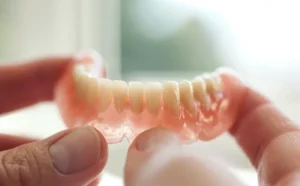
Your dentures were custom-made to fit your mouth exactly as it was at that time. As your jawbone gradually changes shape, that perfect fit fades. It’s not that your dentures are broken or defective. It’s that your mouth has changed, and your dentures haven’t.
Some patients notice this happening within just a few years. For others, it takes longer. But for most people who wear traditional dentures, some degree of loosening is almost inevitable.
What That Means for Your Daily Life
A poor fit isn’t just annoying. It can cause real problems.
You might develop sore spots or irritation on your gums. Your speech might sound different, or you might worry about your dentures shifting in the middle of a conversation. Chewing becomes less efficient, which can affect your nutrition. And many patients tell us they feel self-conscious about their smile, worried that others can tell their dentures aren’t stable.
None of that is your fault. It’s simply a sign that your mouth has changed, and it’s time to explore solutions.
What We Can Do About It
At Mid Michigan Smiles, we have several ways to help. The right option depends on your goals, your budget, and how much change you’ve experienced.
- A denture reline: This is the simplest solution. We take an impression of your current gums and send it to the lab, where they add new material to the inside of your denture to create a better fit. It’s affordable, non-invasive, and usually takes just a couple of appointments.
- A denture rebase: If your denture base is worn or damaged, we might recommend replacing the entire pink acrylic base while keeping your existing teeth. This gives you a completely fresh foundation.
- A new set of dentures: Sometimes, the changes are significant enough that starting fresh is the best path forward. A new set allows us to update the shape, color, and fit to match your current needs.
- Implant-supported dentures: This is the most transformative option. By placing a few dental implants in your jaw, we can snap your denture securely into place. It won’t shift or click. You can eat, talk, and laugh with complete confidence. And the implants provide the stimulation your bone needs to stay healthy, which helps prevent further resorption.
Dr. Raymond Ribitch has special training in prosthodontics, the field that focuses on tooth replacement. That means he understands the science behind dentures and bone loss better than most. He’ll walk you through every option, explain the pros and cons, and help you choose what fits your life.
You Don’t Have to Settle
If your dentures don’t fit like they used to, that’s not a sign of failure. It’s just a sign that your body has changed; and that’s perfectly normal. The good news is that we have solutions.
Give our team at Mid Michigan Smiles a call at 989-772-1344 or request an appointment online. We’ll take a look, listen to your concerns, and help you find a solution that gets you back to eating, talking, and smiling without worry.